


Our 2023 Music Industry Report was the result of a comprehensive survey that looked at the state of independent music and the challenges faced by independent musicians in the digital era. The conclusions in that report were worrying: 46% of respondents said they didn’t earn any money at all from their music-related activities. What’s more, only 11% of respondents said they earned a living solely through music.
Now, in 2025, the industry landscape has undergone further rapid transformation, marked by intensified digital competition and the major technological shift of AI and related tools. How can we forget about all the recent AI-related controversies, like the time when AI-generated band The Velvet Sundown suddenly popped up on popular Spotify playlists and charts?
To gauge the real-world impact of these changes in 2025, we conducted our survey once again, focusing on core areas like financial stability, career roadblocks, and the emerging AI frontier. The data reveals a complex reality: while independent artists are more digitally connected than ever, they face a deepening financial crisis that is offsetting small gains in professional status.
Only 13% of independent artists are able to sustain themselves through music alone in 2025
The journey for independent artists striving for a stable, full-time career remains exceptionally difficult. However, compared to two years ago, a slightly larger percentage of artists are now able to report a living solely through their craft.
When asked ‘How do you earn a living?,’ the results for earning a full-time income solely from music showed a small but notable increase: 13.3% of respondents said they earn a living solely through music-related activities in 2025. This is up from the 11% reported in the 2023 survey. This suggests that, while the path remains challenging, a small group of independent artists are successfully navigating the market to achieve self-sufficiency.

78% of independent artists made less than $15k from music in the past year
The financial landscape for independent artists remains challenging. In our 2025 cohort, 77.8% of artists earned less than $15,000 from their music. This figure underscores the difficulty of breaking into higher revenue brackets and aligns with wider industry trends indicating that a significant majority of artists are competing for smaller shares of available revenue.
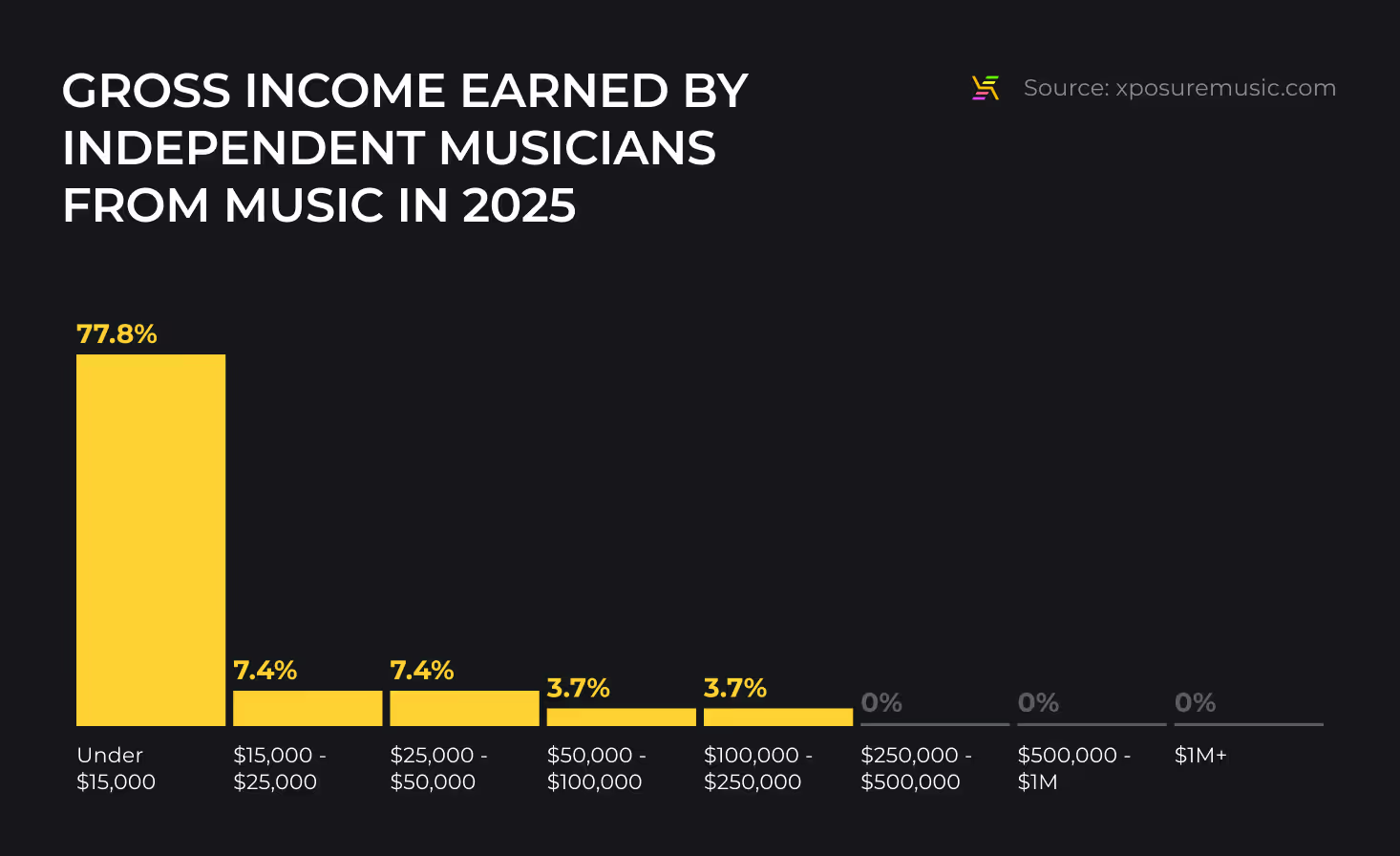
This financial deficit forces artists to rely heavily on outside employment, with 17.8% of respondents having a full-time job and pursuing music only in their spare time. 31.1% have a part-time job, while 35.6% work freelance gigs to support themselves. Furthermore, non-music earnings have also decreased: 42.2% made less than $5,000 from activities unrelated to music, compared to 17% in 2023.
63% of artists say streaming royalties are their biggest source of income from music
Streaming royalties have cemented their position as the undisputed financial pillar for monetizing independent music. In 2023, 25% of artists identified streaming royalties as their biggest source of income. Two years later, that figure rose to 63% of artists citing streaming royalties as their single biggest source of income from music.
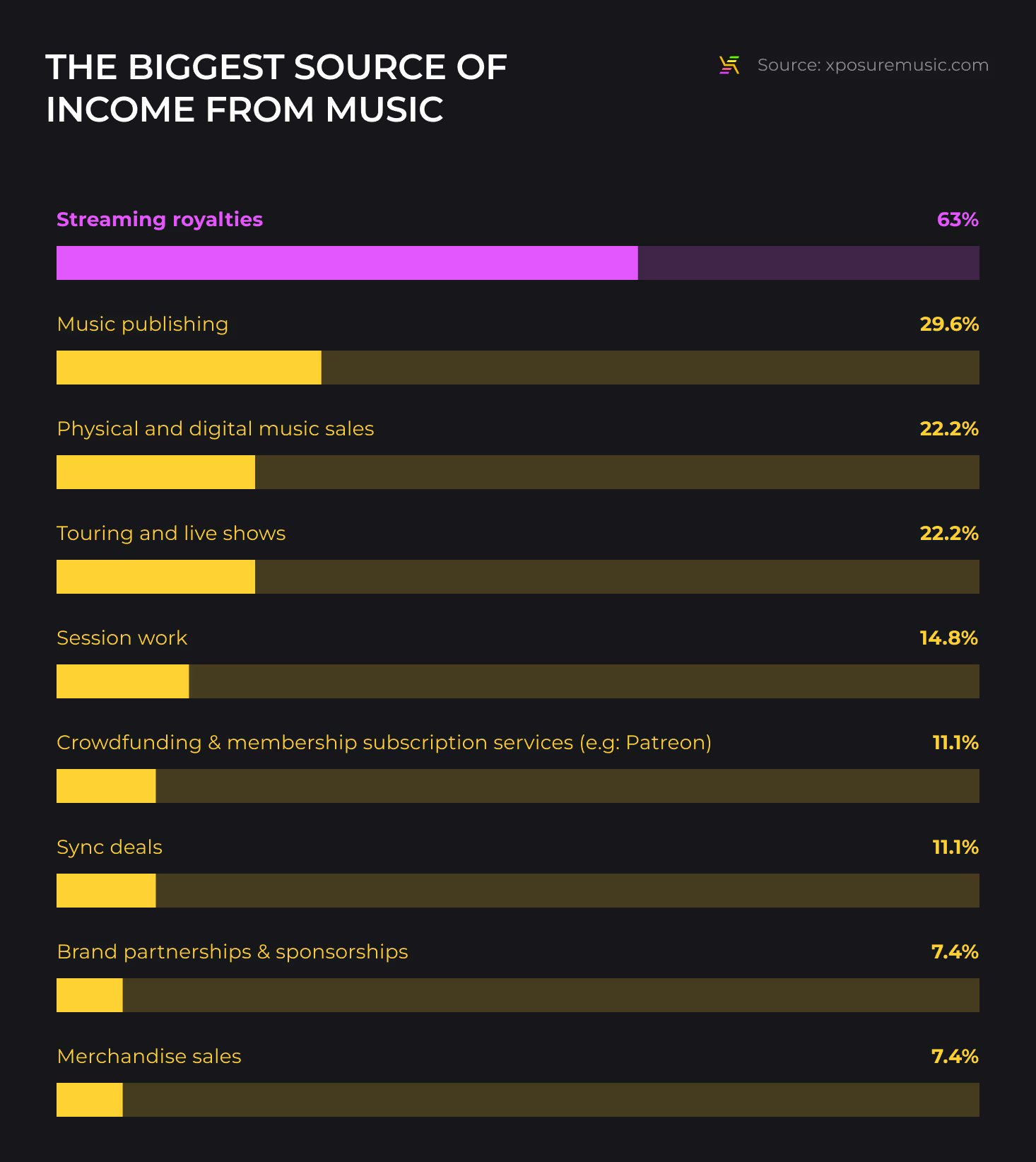
This represents a big shift in how independent artists are paid, with digital platforms being the central source of revenue. The second most cited biggest income source was Music Publishing (29.6%), which grew significantly from 9% in 2023. This suggests a growing sophistication among artists in securing and tracking their composition royalties.
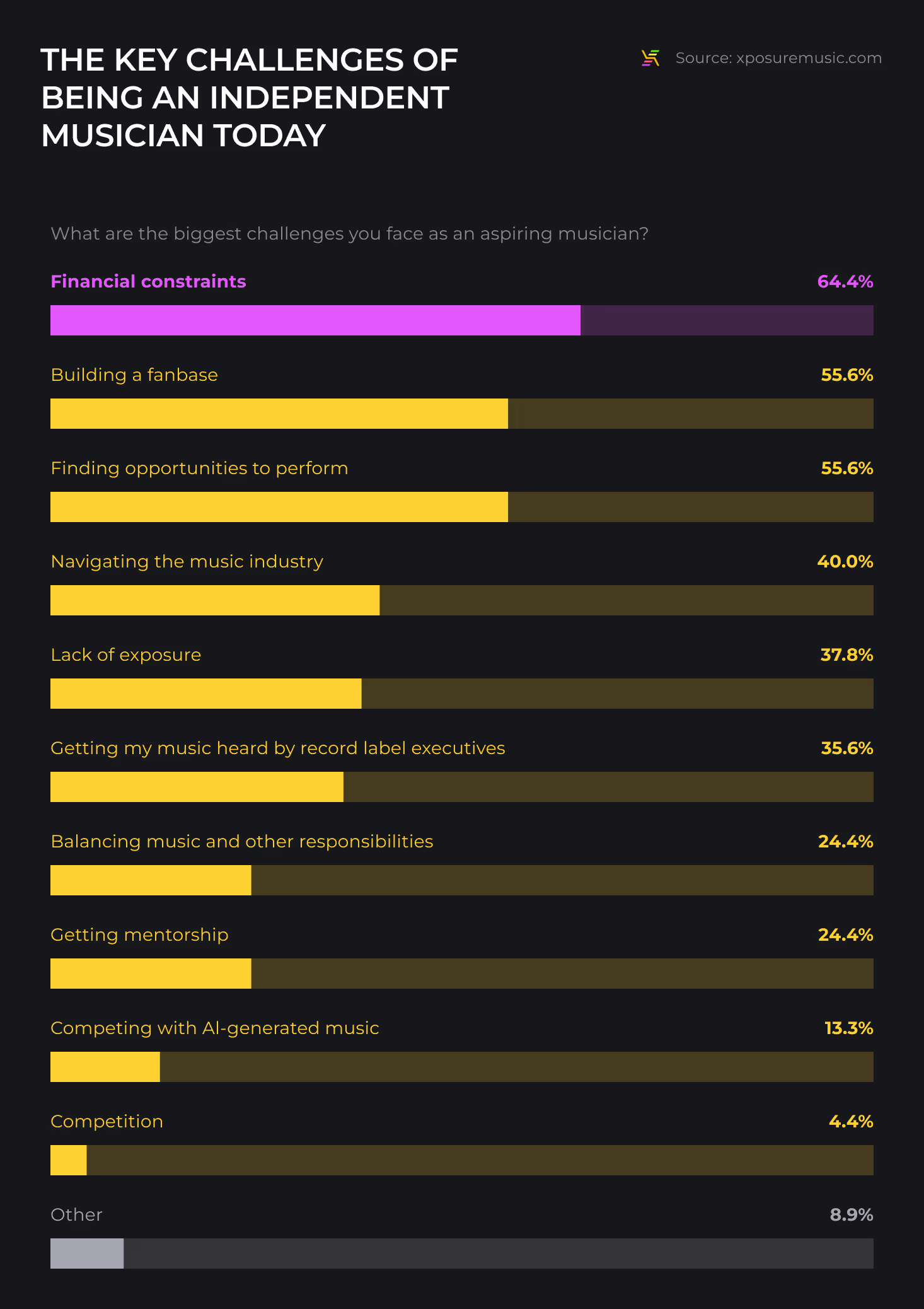
64% of respondents cite financial constraints as the top challenge for independent artists
The intense financial strain has now become the most critical issue for independent artists, replacing ‘Lack of exposure’ as the number one career roadblock.
Financial constraints were cited by 64.4% of artists, up sharply from 39% in 2023. This is the clear leader in the list of challenges. The next biggest hurdles were tied: ‘Building a fanbase’ (55.6%) and ‘Finding opportunities to perform live’ (55.6%).
‘Lack of exposure’ has dropped to the fifth spot (37.8%). This trend indicates that the current issue is not just about getting heard, but about securing the capital and resources necessary to market, tour, and produce at a competitive level.
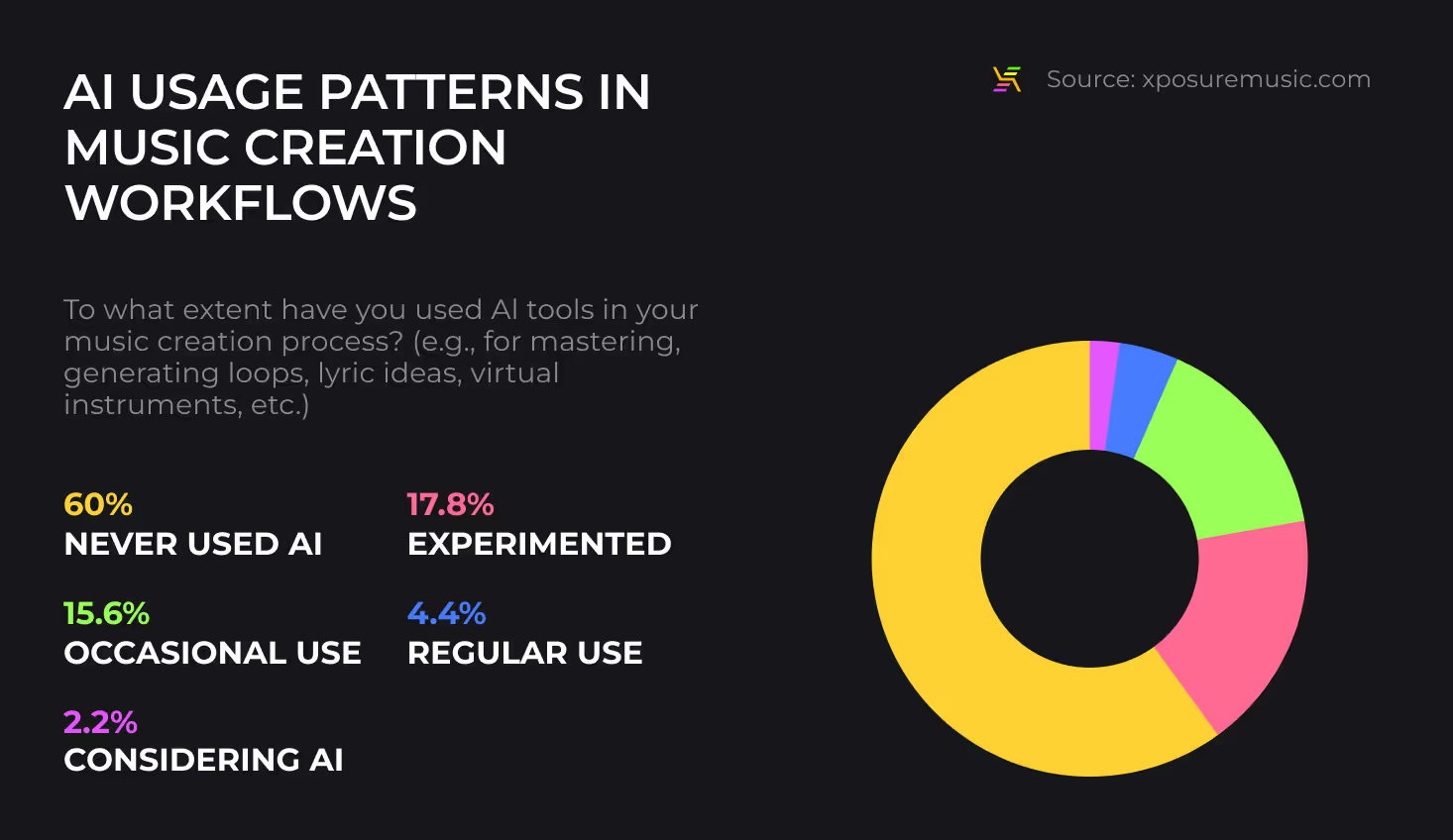
60% of independent artists never used any AI tools to create music in 2025
A new section of our 2025 survey assessed the use and sentiment toward Artificial Intelligence tools. The results indicate widespread caution among independent artists: 60% of artists have never used any AI tools in their music creation process. Only 4.4% report regularly incorporating AI tools into their workflow.
Artist sentiment is driven more by fear of displacement and devaluation than excitement over creative potential. The biggest fears center on the value of human art: decreased value of human creativity (42.2%), potential copyright infringement (31.1%), and unfair competition (13.3%).
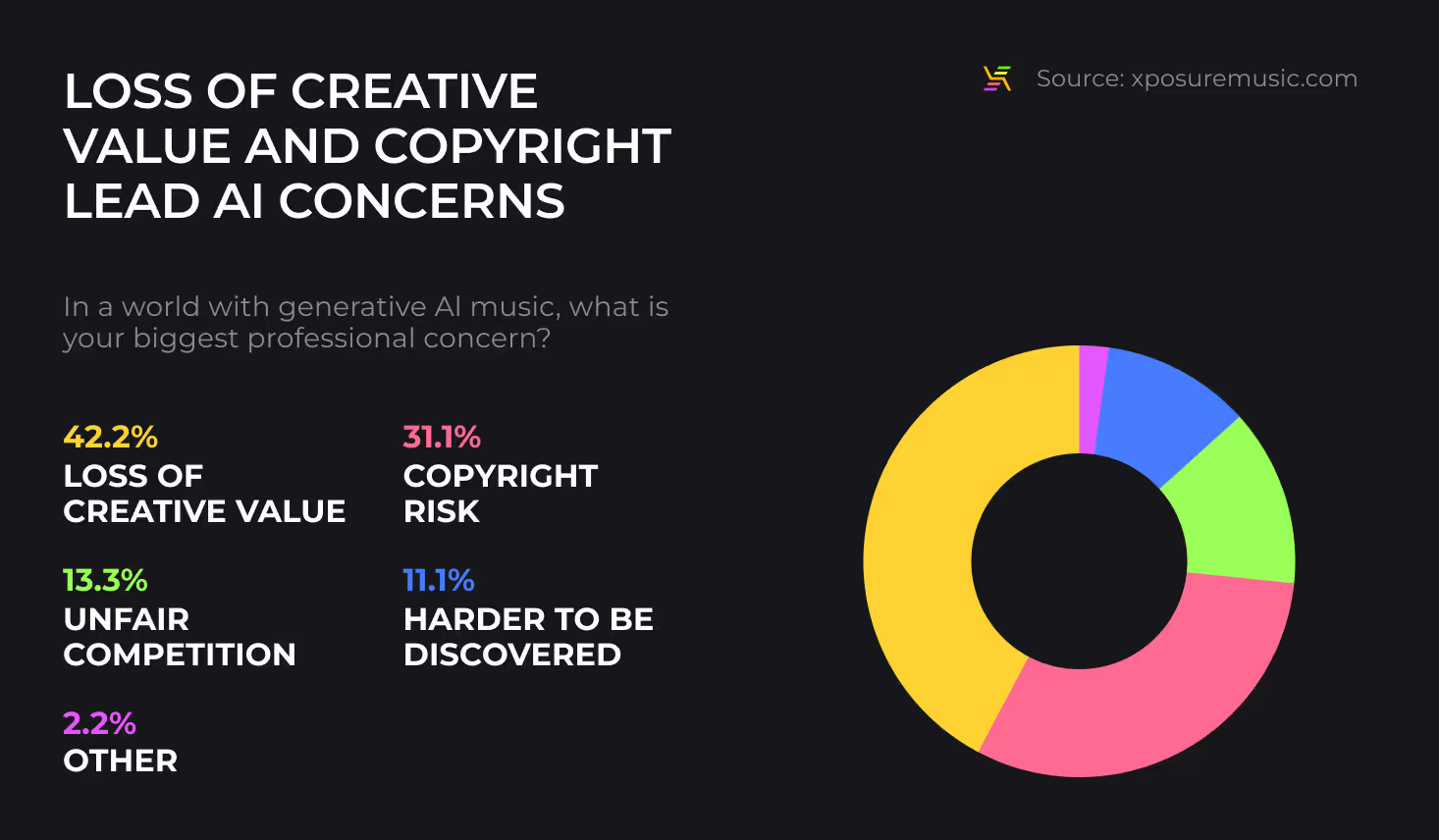
The competitive threat is already tangible, with 22.2% of artists citing ‘Competing with AI-generated music’ as a major career challenge. This new concern signals a growing stress point for independent creators in the digital economy.
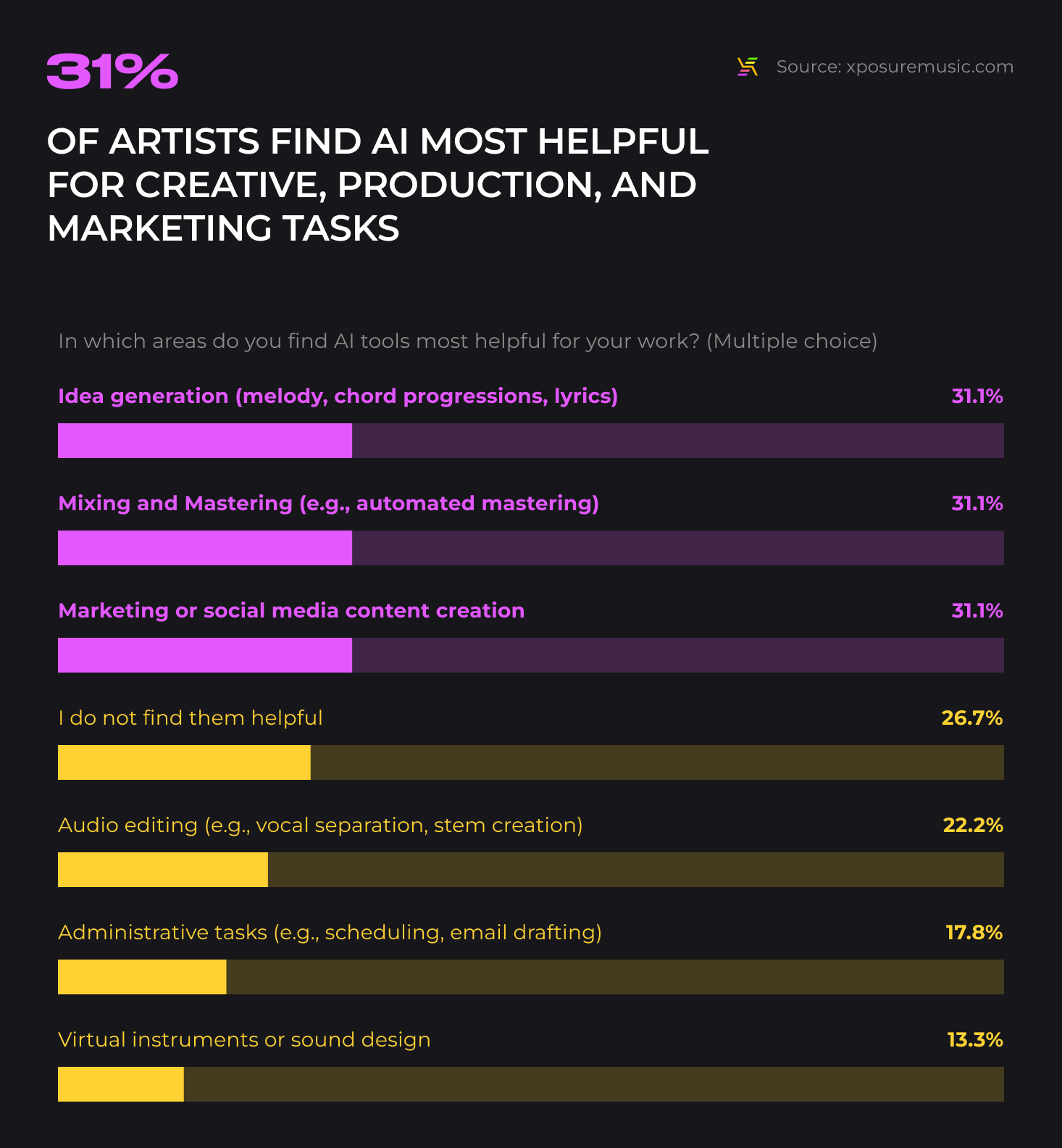
However, it’s not all bad news. When asked where they find AI tools helpful for their work, respondents cited areas like idea generation, mixing and mastering, marketing and social media, and audio editing, meaning that these new AI tools can still be useful when used efficiently.
67% of artists report having fewer than 1,000 monthly listeners on Spotify
Digital distribution has become the standard, and any artist wanting to get their music heard needs to have a strong online presence. However, this high rate of participation has saturated the market, making it significantly harder for individual artists to gain traction: 53.3% of artists on Spotify report having fewer than 500 monthly listeners, and 67% have fewer than 1,000 listeners. Over half of all artists surveyed are struggling to gain traction, with 20% of artists on Spotify having fewer than 1,000 streams on their most popular song.
The same goes for other competitive platforms: 40% of independent artists on Instagram and TikTok report having fewer than 500 followers on each platform.

Instagram is the most popular social media channel for independent artists in 2025
Independent artists remain highly engaged across social media platforms, recognizing the necessity of cultivating a digital community to complement their streaming presence. Only a small minority (around 3%) reported not being active on any platform, demonstrating widespread understanding of the need for an active online strategy.
However, the hierarchy of platform dominance has shifted since 2023: Instagram has taken the top spot as the most popular platform, with 82.2% of artists reporting they are currently active on it. YouTube, which was the most-used platform in 2023, is now a close second at 75.6%. TikTok is next, with 71.1%, followed by Facebook (68.9%) and X, formerly Twitter (44.4%).

Despite hurdles, 67% of respondents said they wish to remain independent
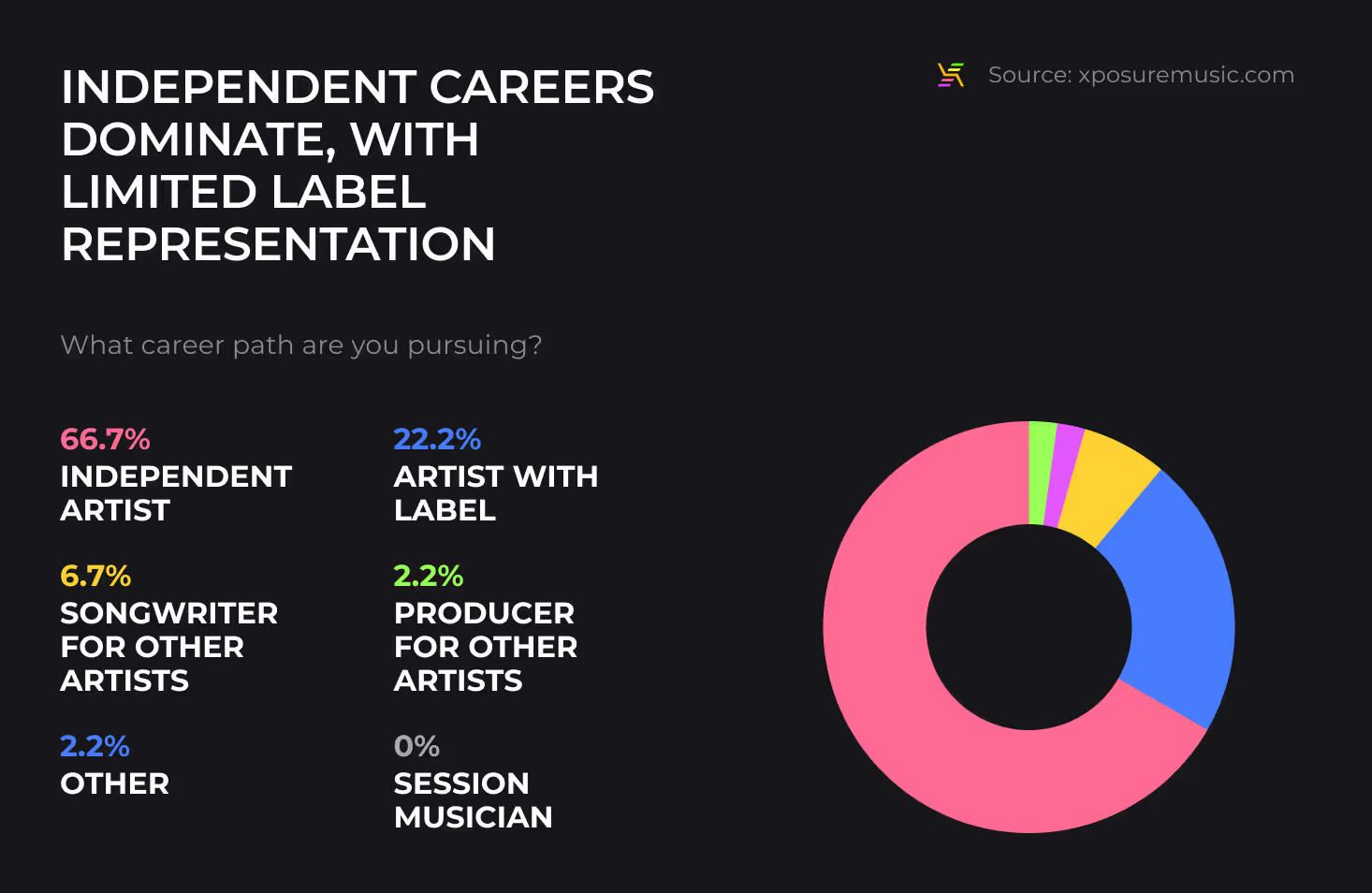
Despite the financial and competitive hurdles, the desire for autonomy remains strong: 67% of artists said their desired career path is to remain an independent artist. The percentage who want to get signed to a record label has dropped to 22.2% (down from 48% in 2023).
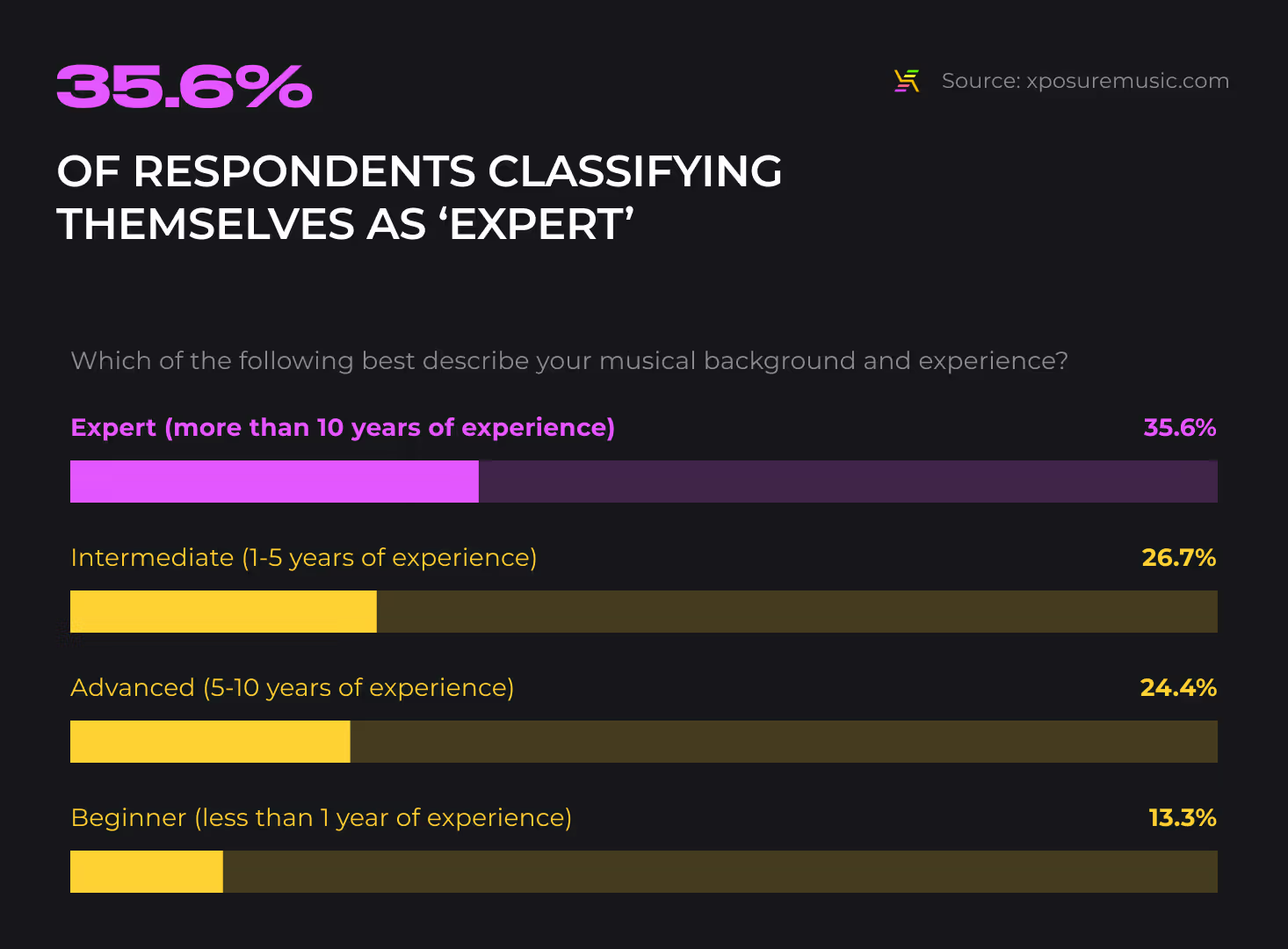
The independent scene is also increasingly experienced, with 35.6% of respondents classifying themselves as ‘Expert’ (more than 10 years of experience), showing that the struggle for financial stability is affecting seasoned musicians, not just newcomers.


.jpg)
.jpg)
.jpg)


